Choosing a new air conditioner is about more than comfort. For homeowners in Canton MA, the decision intersects with energy bills, home value, and a patchwork of incentives that can defray thousands of dollars from the sticker price. I’ve installed and overseen dozens of systems here, worked with local HVAC contractors, and helped customers navigate rebate paperwork. The savings are real when you plan ahead; the catch is that the right paperwork, proper sizing, and selecting eligible equipment matter as much as the unit itself.
Why it pays to be deliberate Replacing an old, inefficient central air system can slash summer electric bills by 20 to 40 percent, depending on the equipment and the home’s envelope. That cutback alone shortens the payback period, but incentives accelerate the return. Federal tax credits, utility rebates, and state-level programs often stack, though not always in obvious ways. If you shop on price alone, you can miss hundreds or even thousands of dollars in incentives. If you plan with rebates in mind and work with a knowledgeable HVAC contractor, the incremental upfront cost for higher-efficiency equipment starts to look like an investment rather than an expense.
What incentives are commonly available (and what to watch for) Federal tax credit: For qualifying heat pumps and other electrification measures, current federal rules generally allow a percent-based tax credit for a portion of installed costs. The credit applies to certain air-source heat pumps and related upgrades and is claimed on your annual tax return. Because tax policy can change, confirm eligibility for your project year with a tax professional or IRS guidance. These credits typically reduce your tax liability rather than provide an immediate check at install, so budget planning should reflect that timing.
Massachusetts and local utility programs: Massachusetts is one of the more proactive states on energy incentives. Programs run through Mass Save and local utilities such as Eversource and National Grid often offer rebates or reduced-cost assessments for high-efficiency equipment, insulation, and air sealing. These programs frequently require pre-approval or only cover equipment that meets specific efficiency thresholds. Documentation is required: proof of purchase, contractor invoices, and sometimes before-and-after photos. Because program rules evolve, always check the current Mass Save and your utility’s rebate pages before buying.
Manufacturer and retailer promotions: Periodically, manufacturers and local distributors offer promotions on particular models. Those can stack with utility rebates, but the fine print varies. Promotions may require registration or submission within a short window after installation.
Local contractor discounts and financing: A reliable HVAC contractor will know the incentive landscape and often assists with applications. Some firms offer seasonal discounts, deferred-interest financing, or discounts when you bundle heating and cooling work. I recommend verifying any contractor-provided financing terms before signing.
Eligibility and documentation — practical reality Here is the part where projects commonly fall apart: missing a pre-installation inspection or failing to keep vendor receipts. Several programs require the contractor to be a registered program installer, so hiring a company that has no experience with utility rebate paperwork can void access to certain incentives. The sequence matters. For example, some rebates require a home energy assessment through Mass Save before any equipment purchase. Others permit post-installation applications but demand a specific set of documents.
A homeowner I worked with in Canton delayed scheduling a Mass Save assessment until after signing a purchase order. When the installer turned out not to be a participating partner, the homeowner lost access to a rebate of several hundred dollars and had to redo some paperwork. The lesson: stop after the initial estimate and check incentives before finalizing purchase and installation dates.

Which equipment earns the best incentives High-efficiency central air systems, variable-speed compressors, and systems with higher SEER ratings often qualify for greater rebates. Heat pumps, especially cold-climate models, currently attract substantial support because they replace fossil fuel heating and reduce overall emissions. But not all heat pumps qualify for every program; look for models that meet the efficiency and performance criteria listed by Mass Save or your utility.
Sizing and installation quality count as much as equipment. An oversized unit cycles inefficiently and shortens equipment life, erasing efficiency gains. Proper refrigerant charge, ductwork integrity, and airflow calibration are often required for incentives to remain valid. Some rebates stipulate that certain diagnostic tests or final inspections be performed and documented by the installing contractor.
How to approach the process — practical steps The pathway from deciding to install a new AC to receiving rebates tends to follow a few clear stages. If you want a short checklist to follow, use this to keep paperwork and timing in order.
Request a home energy assessment or confirm whether one is required by your utility or Mass Save before purchase. Get multiple written estimates that include equipment specs, SEER ratings, and an itemized breakdown of labor and materials. Confirm contractor eligibility for rebates and whether they will submit paperwork or provide documents for you to submit. Secure pre-approval for any rebates that require it, then schedule installation. Keep all invoices, model numbers, and inspection forms; submit rebate applications promptly.Choosing an HVAC contractor in Canton MA Selecting an honest, experienced HVAC contractor is more important than choosing the highest-efficiency equipment. A properly installed 16 SEER system can outperform a poorly installed 20 SEER unit. Look for firms with local track records, clear licensing and insurance, and familiarity with New England climate needs.
Ask prospective contractors about their experience with Mass Save, Eversource or National Grid rebates, and federal tax credit paperwork. Ask for references from recent Canton projects, and if possible, visit a completed job to inspect ductwork and installation neatness. If a contractor promises certain rebates without documentation, treat that as a red flag.
I recommend asking the following questions during estimates to separate competent crews from the rest. Keep them short and direct.
Are you an authorized installer for Mass Save or our local utility rebate programs, and do you handle applications? Which specific models do you recommend and why, including their SEER and HSPF ratings? How will you size the system for our home, and do you perform a manual J load calculation? What guarantees do you offer on labor, and what warranty work do you handle in-house? If rebates require an inspection or diagnostic reports, will you provide those documents and assist with submission?Comparing options: central AC, heat pump, ductless Central air systems remain common, and if you already have ductwork in decent condition, upgrading the outdoor condensing unit and indoor coil can be cost-effective. However, duct losses can eat into efficiency gains. In homes with poor ducts, sealing and insulating ductwork can qualify for incentives and yield bigger savings than swapping an outdoor unit alone.
Mini-split ductless heat pumps shine in homes without ducts or in additions where extending ducts would be invasive and expensive. They provide zoned control and can act as primary heating in milder winters or as supplemental heat in colder months. Cold-climate ductless units have improved dramatically; many models now operate efficiently in single-digit temperatures. Ductless setups also often qualify for generous rebates because they reduce fossil fuel use.
A whole-home air-source heat pump replaces both heating and cooling equipment. Upfront cost is higher, but federal and state incentives frequently tilt the economic balance in favor of heat pumps, especially if you are replacing an aging oil or propane furnace. When considering a full conversion, run the numbers for long-term fuel savings, expected maintenance differences, and available rebates.
Paperwork, timelines, and common pitfalls Rebate programs change their rules and funding availability, and some run on a first-come, first-served basis. Expect the following timeline realities: pre-approval can take a few weeks, and reimbursement checks may arrive several weeks after submission. For tax credits, expect the financial benefit when you file your annual return.
Common pitfalls include submitting incomplete applications, failing to include required serial numbers, and neglecting to obtain necessary pre-installation approvals. If a contractor offers to handle the entire process, get that commitment in writing and ask to review the forms they plan to submit on your behalf.
Realistic cost expectations and payback examples A basic replacement of a mid-efficiency central AC with a high-efficiency unit in Canton might cost several thousand dollars in equipment and installation. Upgrading from an older 10 SEER system to a new 16 or 18 SEER system can cost more upfront, but annual energy savings of 20 to 30 percent are common. If energy bills today run $200 per month in July and August combined, that could fall by $40 to $60 per month after the upgrade, depending on system use and electricity rates.
Heat pump conversions often have higher upfront costs, particularly if ductwork needs remodeling or if buffer tanks and controls are required for integrated heating systems. However, with federal tax credits and state rebates, the net installed cost sometimes approaches parity with traditional systems, especially when you factor in fuel savings and lower maintenance.
If you want a rough example, a homeowner replacing a 15-year-old central AC might see:
- Equipment and installation: a wide range, often $4,000 to $12,000 depending on complexity. Utility rebates and manufacturer promotions: from a few hundred dollars to several thousand, depending on model and program. Federal tax credits for qualifying heat pumps: potentially 30 percent of certain costs, subject to program caps and tax liability.
Because costs vary by home, contractor, and program, use estimates as a starting point and get detailed proposals before committing.
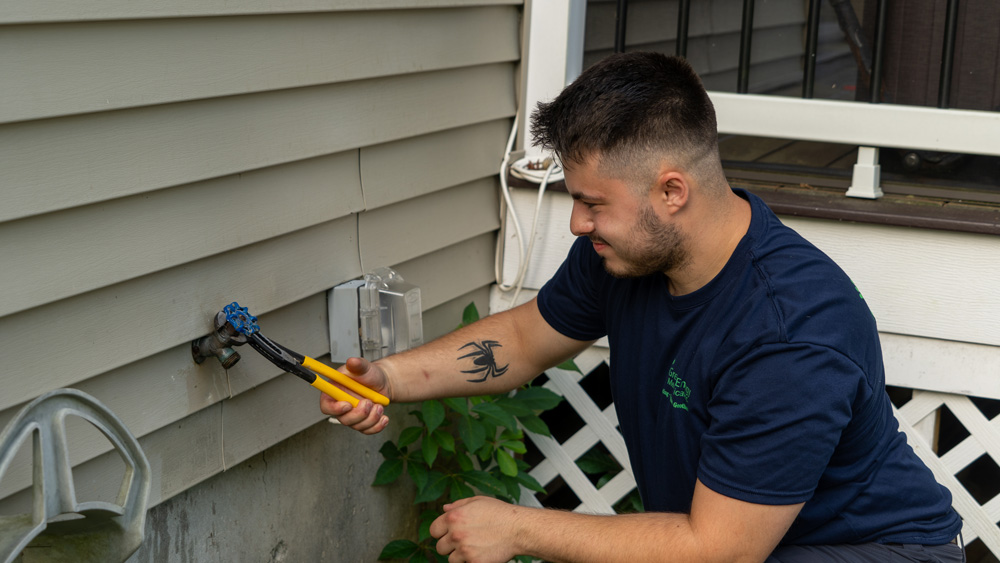
Why working with a local company like Green Energy AC Heating & Plumbing Repair can help Local firms that have worked in Canton for years understand our neighborhood construction types, the quirks of older New England homes, and the local inspection process. A contractor familiar with Green Energy AC Heating & Plumbing Repair or similar local companies is often better at navigating Mass Save and utility rebate channels, and they can sometimes anticipate line items that other vendors overlook, such as required air-sealing work or thermostat compatibility.
A recent client in Canton used a well-known local contractor to install a cold-climate heat pump. The contractor pre-qualified the model, coordinated a Mass Save assessment, and filed the rebate paperwork. The homeowner saved on the installed cost and started seeing lower electric bills the following summer. That sort of coordination is what turns incentive potential into actual savings.
Maintenance, longevity, and preserving rebate benefits Once your system is in, maintenance matters. Regular filter changes, annual tune-ups, and occasional coil cleaning preserve efficiency. Some rebates require periodic maintenance to keep warranties valid or to avoid voiding performance guarantees. Keep service records; you may need them if you sell your home or make a future claim.
If you plan to sell within a few years, having properly documented, energy-efficient equipment can be a marketing advantage. Buyers often value lower expected utility bills, and documented rebates or energy assessments can reassure them.
Ac repair in Canton MAFinal persuasion: act with information, not impulse The combination of federal credits, Massachusetts programs, and utility rebates makes now a smart time to consider replacing old cooling equipment in Canton. But the value you get depends on sequencing, paperwork, and the contractor you choose. Start with an energy assessment, get multiple estimates, and insist that your contractor walks you through rebate eligibility and application tasks. A modest amount of patience up front will usually yield a better system, larger incentives, and lower bills for many years.
If you want a practical next move, schedule a certified home energy assessment through Mass Save or contact a local HVAC contractor experienced with Mass Save, HVAC repair, and AC installation in Canton. Bring copies of your recent electric bills to estimates, ask about specific rebates for the models proposed, and request written confirmation that the installer will provide all documentation required for incentive claims. When you pair the right equipment with proper installation and the available incentives, a new AC becomes an investment that cools, saves, and increases your home's resilience.
Green Energy AC Heating & Plumbing Repair
480 Neponset St, Canton, MA 02021, United States
+1 (877) 630-3386
[email protected]
Website: https://greenenergymech.com